
Take a Free Course to Learn More About Interactive Metronome
Our Five Most Popular Courses Are Listed First
Earn Contact Hours and be eligible to earn ASHA/AOTA CEUs with these FREE Course Offerings
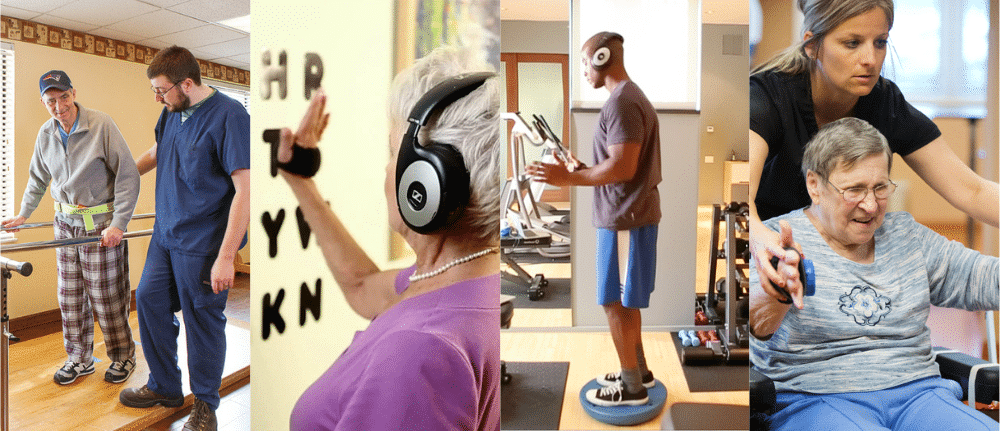
Overview of Adult Rehab with Interactive Metronome for Cognitive & Motor Skills
This informative FREE on-demand course will provide an overview of the science, clinical application and portability of Interactive Metronome for adults with a variety of conditions in order to accelerate and exceed functional rehabilitation outcomes. In addition, participants will be introduced to the IM Fall Risk Reduction Program, a revolutionary approach that emphasizes the use of IM training in inpatient, outpatient and home healthcare settings to directly address areas of patient function that contribute to falls: impaired balance and gait, transfers, attention, impulsivity and fear of falling. Cases will be discussed.
Learning Outcomes:
Upon completion of this course, participants will be able to:
- Provide a minimum of 3 references that provide evidence of the effectiveness of Interactive Metronome;
- List the 4 major components of motor learning and how IM impacts each;
- Name at least 3 areas of function that may be positively impacted by timing & rhythm training.
Specific Learning Outcomes for Speech-Language Pathologists & Audiologists:
- Provide a minimum of 3 references that provide evidence of the effectiveness of Interactive Metronome for cognitive and communication disorders;
- Name 3 conditions commonly seen by Speech-Language Pathologists in adult rehabilitation that may benefit from timing & rhythm training with Interactive Metronome.
- Speaker introduction & disclosure
- Interactive Metronome: What is it?
- Demonstration
- The IM Effect: Millisecond Feedback for Timing
- Individualized Approach
- Engagement
- Candidacy
- Case Discussions
- Science
- Cognitive Rehabilitation
- Speech & Language Rehabilitation
- Motor Rehabilitation
- Fall Risk Reduction
- IM Fall Risk Reduction Protocol
- Q & A
- Online post-test & course evaluation
0.1 AOTA; 1.25 NBCOT PDUs (1.0 contact hours)
0.1 ASHA (1.0 contact hours)
PT/PTA & Other Disciplines Not Listed Above: If your discipline or state is not listed above, you may submit paperwork to your state board or association for CEUs if they allow you to do so. Please check with your state board/association prior to registering for this course.
- Overview
-
This informative FREE on-demand course will provide an overview of the science, clinical application and portability of Interactive Metronome for adults with a variety of conditions in order to accelerate and exceed functional rehabilitation outcomes. In addition, participants will be introduced to the IM Fall Risk Reduction Program, a revolutionary approach that emphasizes the use of IM training in inpatient, outpatient and home healthcare settings to directly address areas of patient function that contribute to falls: impaired balance and gait, transfers, attention, impulsivity and fear of falling. Cases will be discussed.
- You'll Learn
-
Learning Outcomes:
Upon completion of this course, participants will be able to:- Provide a minimum of 3 references that provide evidence of the effectiveness of Interactive Metronome;
- List the 4 major components of motor learning and how IM impacts each;
- Name at least 3 areas of function that may be positively impacted by timing & rhythm training.
Specific Learning Outcomes for Speech-Language Pathologists & Audiologists:
- Provide a minimum of 3 references that provide evidence of the effectiveness of Interactive Metronome for cognitive and communication disorders;
- Name 3 conditions commonly seen by Speech-Language Pathologists in adult rehabilitation that may benefit from timing & rhythm training with Interactive Metronome.
- Agenda
-
- Speaker introduction & disclosure
- Interactive Metronome: What is it?
- Demonstration
- The IM Effect: Millisecond Feedback for Timing
- Individualized Approach
- Engagement
- Candidacy
- Case Discussions
- Science
- Cognitive Rehabilitation
- Speech & Language Rehabilitation
- Motor Rehabilitation
- Fall Risk Reduction
- IM Fall Risk Reduction Protocol
- Q & A
- Online post-test & course evaluation
- CEUs
-
0.1 AOTA; 1.25 NBCOT PDUs (1.0 contact hours)
0.1 ASHA (1.0 contact hours)PT/PTA & Other Disciplines Not Listed Above: If your discipline or state is not listed above, you may submit paperwork to your state board or association for CEUs if they allow you to do so. Please check with your state board/association prior to registering for this course.
Introduction to IM: Pediatric Application in Hospitals, Clinics and Schools
In this free on-demand webinar, discover the peer-reviewed science behind neurological timing and its critical impact on pediatric development, learning, and neurorehabilitation. Learn how targeting neural synchronization can optimize brain performance and accelerate clinical outcomes for your pediatric patients.
What You’ll Learn:
- The Science of Neural Synchronization: Understand how timing and rhythm serve as foundational neural mechanisms for skill acquisition and brain efficiency.
- Clinical Implications of Timing Deficits: Examine how disrupted timing manifests as core deficits in ADHD, ASD, Dyslexia, Auditory Processing Disorder, Developmental Coordination Disorder, and Concussion/TBI.
- Targeted Symptom Resolution: Learn how IM interventions directly address observable symptoms, including poor executive function, working memory gaps, processing delays, speech impairments, and sensory sensitivities.
- Translational Research Backing: Review the latest biological and clinical data from ongoing research at Harvard University School of Medicine, Northwestern University, and other elite academic centers.
Prerequisites: None. Open to all healthcare, rehabilitation, and educational professionals.
- Speaker Introduction & Disclosure
- 5 min – Interactive Metronome Introduction & Demonstration
- 5 min – The Importance of Millisecond Feedback
- 5 min – Scientific Basis: The IM Effect
- 30 min – Research
- ADHD
- Autism
- Sensory Processing Disorder
- Auditory Processing Disorder
- Mathematics, Reading & Academic Performance
- Developmental Coordination Disorder
- Cerebral Palsy
- 5 min- Candidacy for Interactive Metronome
- 5 min – Question & Answer Period
- 5 min – Online Post-Test & Course Evaluation
0.1 AOTA; 1.25 NBCOT PDUs (1.0 contact hours)
0.1 ASHA (1.0 contact hours)
PT/PTA & Other Disciplines Not Listed Above: If your discipline or state is not listed above, you may submit paperwork to your state board or association for CEUs if they allow you to do so. Please check with your state board/association prior to registering for this course.
- Overview
-
In this free on-demand webinar, discover the peer-reviewed science behind neurological timing and its critical impact on pediatric development, learning, and neurorehabilitation. Learn how targeting neural synchronization can optimize brain performance and accelerate clinical outcomes for your pediatric patients.
- You'll Learn
-
What You’ll Learn:
- The Science of Neural Synchronization: Understand how timing and rhythm serve as foundational neural mechanisms for skill acquisition and brain efficiency.
- Clinical Implications of Timing Deficits: Examine how disrupted timing manifests as core deficits in ADHD, ASD, Dyslexia, Auditory Processing Disorder, Developmental Coordination Disorder, and Concussion/TBI.
- Targeted Symptom Resolution: Learn how IM interventions directly address observable symptoms, including poor executive function, working memory gaps, processing delays, speech impairments, and sensory sensitivities.
- Translational Research Backing: Review the latest biological and clinical data from ongoing research at Harvard University School of Medicine, Northwestern University, and other elite academic centers.
Prerequisites: None. Open to all healthcare, rehabilitation, and educational professionals.
- Agenda
-
- Speaker Introduction & Disclosure
- 5 min – Interactive Metronome Introduction & Demonstration
- 5 min – The Importance of Millisecond Feedback
- 5 min – Scientific Basis: The IM Effect
- 30 min – Research
- ADHD
- Autism
- Sensory Processing Disorder
- Auditory Processing Disorder
- Mathematics, Reading & Academic Performance
- Developmental Coordination Disorder
- Cerebral Palsy
- 5 min- Candidacy for Interactive Metronome
- 5 min – Question & Answer Period
- 5 min – Online Post-Test & Course Evaluation
- CEUs
-
0.1 AOTA; 1.25 NBCOT PDUs (1.0 contact hours)
0.1 ASHA (1.0 contact hours)PT/PTA & Other Disciplines Not Listed Above: If your discipline or state is not listed above, you may submit paperwork to your state board or association for CEUs if they allow you to do so. Please check with your state board/association prior to registering for this course.

An Introduction and Practical Guide to the Effective Treatment of Autism with IM
The complex, evolving nature of Autism Spectrum Disorder (ASD) requires practitioners to continually seek advanced, adaptive interventions. This course provides a practical solution, exploring how sensorimotor synchronization with Interactive Metronome (IM) targets core timing deficits to rapidly improve learning, communication, and environmental engagement. Learn clinically proven strategies to integrate neuro-timing into your comprehensive ASD treatment plans.
You will learn how to:
- Analyze Contemporary ASD Insights: Understand the latest advances in Autism Spectrum Disorder (ASD) research, specifically focusing on the pivotal role neural timing and rhythm play in speech, language, pragmatics, cognition, motor function, and sensory processing.
- Evaluate Individualized Profiles: Assess and identify the unique strengths, neurodevelopmental needs, and sensorimotor timing profiles of individuals on the autism spectrum.
- Design Custom IM Interventions: Develop tailored Interactive Metronome (IM) training plans that account for specific communication, motor, sensory, and behavioral challenges.
- Implement Evidence-Based Strategies: Integrate sensorimotor synchronization training effectively into a comprehensive treatment plan to enhance a patient’s capacity for learning and environmental engagement.
- Translate Theory to Practice: Apply practical, real-world clinical techniques demonstrated through case studies and video examples directly into pediatric practice.
- Introduction and review of course objectives
- Review of the most current research on timing, rhythm and Autism Spectrum Disorders (ASD)
- Characteristics of an effective IM training program for individuals with ASD
- Conducting the IM assessment with a person who has ASD
- Developing an effective IM training plan for the person with ASD
- Preparing & setting up the treatment environment for the person with ASD
- Implementing individualized IM training and treatment techniques that work well for individuals with ASD
- Educating the person with ASD and stakeholders regarding the benefit of IM training and home programming
- Presentation of case studies and period of question and answer
- Exam and course evaluation
0.2 AOTA; 2.50 NBCOT PDUs (2.0 contact hours)
0.2 ASHA (2.0 contact hours)
PT/PTA & Other Disciplines Not Listed Above: If your discipline or state is not listed above, you may submit paperwork to your state board or association for CEUs if they allow you to do so. Please check with your state board/association prior to registering for this course.
- Overview
-
The complex, evolving nature of Autism Spectrum Disorder (ASD) requires practitioners to continually seek advanced, adaptive interventions. This course provides a practical solution, exploring how sensorimotor synchronization with Interactive Metronome (IM) targets core timing deficits to rapidly improve learning, communication, and environmental engagement. Learn clinically proven strategies to integrate neuro-timing into your comprehensive ASD treatment plans.
- You'll Learn
-
You will learn how to:
- Analyze Contemporary ASD Insights: Understand the latest advances in Autism Spectrum Disorder (ASD) research, specifically focusing on the pivotal role neural timing and rhythm play in speech, language, pragmatics, cognition, motor function, and sensory processing.
- Evaluate Individualized Profiles: Assess and identify the unique strengths, neurodevelopmental needs, and sensorimotor timing profiles of individuals on the autism spectrum.
- Design Custom IM Interventions: Develop tailored Interactive Metronome (IM) training plans that account for specific communication, motor, sensory, and behavioral challenges.
- Implement Evidence-Based Strategies: Integrate sensorimotor synchronization training effectively into a comprehensive treatment plan to enhance a patient’s capacity for learning and environmental engagement.
- Translate Theory to Practice: Apply practical, real-world clinical techniques demonstrated through case studies and video examples directly into pediatric practice.
- Agenda
-
- Introduction and review of course objectives
- Review of the most current research on timing, rhythm and Autism Spectrum Disorders (ASD)
- Characteristics of an effective IM training program for individuals with ASD
- Conducting the IM assessment with a person who has ASD
- Developing an effective IM training plan for the person with ASD
- Preparing & setting up the treatment environment for the person with ASD
- Implementing individualized IM training and treatment techniques that work well for individuals with ASD
- Educating the person with ASD and stakeholders regarding the benefit of IM training and home programming
- Presentation of case studies and period of question and answer
- Exam and course evaluation
- CEUs
-
0.2 AOTA; 2.50 NBCOT PDUs (2.0 contact hours)
0.2 ASHA (2.0 contact hours)PT/PTA & Other Disciplines Not Listed Above: If your discipline or state is not listed above, you may submit paperwork to your state board or association for CEUs if they allow you to do so. Please check with your state board/association prior to registering for this course.

Practice Management Essentials: Growth & Scalability with Interactive Metronome
Balancing exceptional patient care with a profitable business can be a difficult challenge. Designed for practice owners, managers, and growth-minded clinicians, this course—the first in a three-part series—provides the blueprint to align your business vision with evidence-based clinical protocols.
Learn how to leverage Interactive Metronome (IM) to accelerate patient outcomes while mastering the crucial billing, coding, and strategic planning frameworks needed to boost revenue, lower team stress, and build a thriving, scalable practice.
Upon completing this training series, participants across all therapy disciplines will be able to:
- Strategic Business Planning: Define, review, and execute a clear business vision, mission, and measurable objectives to drive practice growth.
- Culture & Retention: Build a supportive workplace culture that aligns with business values and fosters staff retention.
- Clinical Integration: Understand the impact of evidence-based timing and rhythm interventions (Interactive Metronome) on accelerating patient outcomes and increasing satisfaction.
- Financial Management & Billing: Establish working budgets, interpret financial reports, and select appropriate billing codes or build fee schedules for integrated therapy services.
- Marketing & Audience Targeting: Identify target audiences, utilize clinical tools to support business success, and implement effective branding and marketing strategies.
Part 1: Developing a Strategy and Incorporating IM into Practice
Focus: Vision & Foundations
Learn how to define and execute a clear business strategy by integrating evidence-based Interactive Metronome (IM) protocols. This session establishes the blueprint for building a culture of excellence, improving clinical outcomes, and maximizing profitability.
Part 2: Building a Successful Practice With IM
Focus: Practical Growth Strategies
Build on the concepts from Part 1 with actionable, real-world growth strategies. Led by an experienced private practitioner, this session explores how to optimize your day-to-day business operations, elevate clinician productivity, and boost client satisfaction.
Part 3: Practice Management From Good to GREAT
Focus: Advanced Administration & Scalability
Scale your practice by mastering administrative systems and advanced clinical techniques. Discover how to effectively integrate and bill for IM Home services, capture local market share, and implement creative workflows for a highly profitable, robust therapy model.
0.3 AOTA; 3.75 NBCOT PDUs (3.0 contact hours)
0.3 ASHA (3.0 contact hours)
PT/PTA & Other Disciplines Not Listed Above: If your discipline or state is not listed above, you may submit paperwork to your state board or association for CEUs if they allow you to do so. Please check with your state board/association prior to registering for this course.
Contact hours/CEUs are offered pending successful completion of Parts 1-3 of this course, including the written exam for each part. Partial credit will not be awarded.
- Overview
-
Balancing exceptional patient care with a profitable business can be a difficult challenge. Designed for practice owners, managers, and growth-minded clinicians, this course—the first in a three-part series—provides the blueprint to align your business vision with evidence-based clinical protocols.
Learn how to leverage Interactive Metronome (IM) to accelerate patient outcomes while mastering the crucial billing, coding, and strategic planning frameworks needed to boost revenue, lower team stress, and build a thriving, scalable practice.
- You'll Learn
-
Upon completing this training series, participants across all therapy disciplines will be able to:
- Strategic Business Planning: Define, review, and execute a clear business vision, mission, and measurable objectives to drive practice growth.
- Culture & Retention: Build a supportive workplace culture that aligns with business values and fosters staff retention.
- Clinical Integration: Understand the impact of evidence-based timing and rhythm interventions (Interactive Metronome) on accelerating patient outcomes and increasing satisfaction.
- Financial Management & Billing: Establish working budgets, interpret financial reports, and select appropriate billing codes or build fee schedules for integrated therapy services.
- Marketing & Audience Targeting: Identify target audiences, utilize clinical tools to support business success, and implement effective branding and marketing strategies.
- Agenda
-
Part 1: Developing a Strategy and Incorporating IM into Practice
Focus: Vision & FoundationsLearn how to define and execute a clear business strategy by integrating evidence-based Interactive Metronome (IM) protocols. This session establishes the blueprint for building a culture of excellence, improving clinical outcomes, and maximizing profitability.
Part 2: Building a Successful Practice With IM
Focus: Practical Growth StrategiesBuild on the concepts from Part 1 with actionable, real-world growth strategies. Led by an experienced private practitioner, this session explores how to optimize your day-to-day business operations, elevate clinician productivity, and boost client satisfaction.
Part 3: Practice Management From Good to GREAT
Focus: Advanced Administration & ScalabilityScale your practice by mastering administrative systems and advanced clinical techniques. Discover how to effectively integrate and bill for IM Home services, capture local market share, and implement creative workflows for a highly profitable, robust therapy model.
- CEUs
-
0.3 AOTA; 3.75 NBCOT PDUs (3.0 contact hours)
0.3 ASHA (3.0 contact hours)PT/PTA & Other Disciplines Not Listed Above: If your discipline or state is not listed above, you may submit paperwork to your state board or association for CEUs if they allow you to do so. Please check with your state board/association prior to registering for this course.
Contact hours/CEUs are offered pending successful completion of Parts 1-3 of this course, including the written exam for each part. Partial credit will not be awarded.
Maintaining Your Patient Relationships: How SSDI Can Help
Sustaining your therapy practice can be challenging when your adult patients experience financial difficulties themselves. This course explains how you can help your patients achieve better treatment outcomes by gaining access to vital income through the federal insurance program called Social Security Disability Insurance (SSDI). SSDI is a vital alternative when your patients’ have experienced a chronic injury or illness that prevents them from working.
This training outlines the importance of SSDI for adult patients, why it’s often overlooked as a resource, the complexity of the application and appeals process, and how you can easily guide them to support with this process.
Learning Outcomes:
Upon completion of this course, participants will be able to:
- Describe the importance of Social Security Disability Insurance and its role for working-age adults.
- List the characteristics and types of diseases and health conditions that are most commonly approved for SSDI by the Social Security Administration (SSA).
- Explain the three criteria that, when met by a patient, means they are likely to be eligible for SSDI and how to get connected with expert assistance in the evaluation process.
- Describe the essential steps of the SSDI application and appeals process, which can be lengthy and complex for people facing injury and illness.
- Understand your role as a therapy provider in helping to document your patient’s medical condition and provide ongoing care.
This course welcomes:
Providers treating adult patients (ages 18 to full retirement age) who have experienced severe injury or illness that may prevent them from working, or returning to work, for 12 months or longer.
*This course is not offered for CEUs.
- Introduction and Overview
- What Is SSDI? Why It Matters To Your Adult Patients
- SSDI: Vital Insurance Coverage that Most Workers Don’t Know About
- Top Conditions and Diseases Approved for SSDI, Nationwide
- Understanding Eligibility for SSDI and Three Essential Criteria
- Why Many Patients Give Up & Getting Help
- Your Value As A Treating Provider
- Questions and Answers
Not Offered for CEUs.
- Overview
-
Sustaining your therapy practice can be challenging when your adult patients experience financial difficulties themselves. This course explains how you can help your patients achieve better treatment outcomes by gaining access to vital income through the federal insurance program called Social Security Disability Insurance (SSDI). SSDI is a vital alternative when your patients’ have experienced a chronic injury or illness that prevents them from working.
This training outlines the importance of SSDI for adult patients, why it’s often overlooked as a resource, the complexity of the application and appeals process, and how you can easily guide them to support with this process.
- You'll Learn
-
Learning Outcomes:
Upon completion of this course, participants will be able to:- Describe the importance of Social Security Disability Insurance and its role for working-age adults.
- List the characteristics and types of diseases and health conditions that are most commonly approved for SSDI by the Social Security Administration (SSA).
- Explain the three criteria that, when met by a patient, means they are likely to be eligible for SSDI and how to get connected with expert assistance in the evaluation process.
- Describe the essential steps of the SSDI application and appeals process, which can be lengthy and complex for people facing injury and illness.
- Understand your role as a therapy provider in helping to document your patient’s medical condition and provide ongoing care.
This course welcomes:
Providers treating adult patients (ages 18 to full retirement age) who have experienced severe injury or illness that may prevent them from working, or returning to work, for 12 months or longer.*This course is not offered for CEUs.
- Agenda
-
- Introduction and Overview
- What Is SSDI? Why It Matters To Your Adult Patients
- SSDI: Vital Insurance Coverage that Most Workers Don’t Know About
- Top Conditions and Diseases Approved for SSDI, Nationwide
- Understanding Eligibility for SSDI and Three Essential Criteria
- Why Many Patients Give Up & Getting Help
- Your Value As A Treating Provider
- Questions and Answers
- CEUs
-
Not Offered for CEUs.

Additional Free Courses
Free Introductory Online Courses: The Basics
New to Interactive Metronome ? These introductory courses explore how IM’s evidence-based protocols can be adapted across healthcare and education disciplines—including OT, PT, SLP, and rehab specialties—to optimize outcomes for your specific client population.
? These introductory courses explore how IM’s evidence-based protocols can be adapted across healthcare and education disciplines—including OT, PT, SLP, and rehab specialties—to optimize outcomes for your specific client population.Free Advanced Courses: Interdisciplinary
 These courses are designed for professionals across hospital, rehab, skilled nursing, assisted-living, and home health settings, this course delivers practical, cross-disciplinary strategies to seamlessly integrate Interactive Metronome into your rehabilitation programs. Learn how to collaborate across specialties to maximize patient outcomes, boost client retention, and streamline your care plans.
| Course Title | Credits Toward Badge | CE Type | Contact Hours | Cost | Format |
|---|---|---|---|---|---|
| IM Interdisciplinary Fall Prevention Strategies | Fall Prevention Strategies | AOTA | 1 | Free | Self Study |
| Enhancing SLP Treatment Outcomes with Rhythmic Cues | Speech/Language | ASHA | 2 | Free | On Demand Webinar |
| Ensuring Clinical Success and Profitability with IM Home | Telepractice | AOTA / ASHA | 1 | Free | On Demand Webinar |
| Implementing Virtual Training with IM-Home: Case Discussions | Telepractice | AOTA | 1 | Free | On Demand Webinar |
| Get the Most from IM-Home: Tips & Motivational Strategies | Telepractice | N/A | N/A | Free | On Demand Webinar |
IM Works. Find Out How It Can Impact Your Practice.
With IM you can easily scale & grow your practice, all while achieving better patient outcomes!